Personal Style Begins Within.
What google style FAQS miss.
Most style questions focus on external advice: how to combine items, choose colors or appear confident. While useful, they overlook your most important source of clarity: your inner expertise.
Neuro-aesthetics shows that each person has a unique beauty response shaped by culture, environment, and personal story. What works beautifully for someone else may not work for you. Lasting style confidence begins with understanding your inner story—the one only you can tell. That’s why the journey starts with Step 1: uncovering your personal story and brand language. From there, Steps 2–6 develop design fluency, the skills to translate who you are into an intentional 35-item wardrobe.
Style questions that matter
Is this me? (Creative)
This question helps you recognize whether a style, fabric, color, or cut aligns with your values, vision, and energy. Your personal brand story provides the first filter for decision-making: does this reflect who you are?
Can style be trained?” (Artistic)
Yes. Everyone has an innate beauty response. Design fluency develops your ability to recognize how shape, color, line, and texture translate into silhouette, fabric, and palette—so you can express your style with confidence.
How many clothes do I need? (Math)
Wardrobe clarity comes from understanding what you wear, how you live, and how pieces combine. A well-designed system reveals that a focused 35-item wardrobe can support a full, expressive life.
Do I want it or need it?” (Emotional)
Design fluency strengthens your ability to appreciate beauty without immediately consuming it. This creates space to choose with intention—less, but better..
Frequently Asked Questions about coaching
The framework deep dives into how style actually works. Coaching helps
you apply it to you.
-
Coaching supports transformation by helping you see what is difficult to recognize on your own.
At the beginning of this journey, it’s natural to repeat familiar patterns. Even with new insight, perception tends to default to what already feels known. Coaching gently brings you back to your original intention: change and integration.
Using principles reflected in the Johari Window, coaching helps reveal blind spots—preferences, habits, and expressions that feel natural but no longer serve your desired visible outcome.
Coaching holds up a mirror and keeps you aligned with the identity you are actively shaping.
-
Most people already live comfortably inside one part of their Archetype Duo. That archetype feels familiar, safe, and well-rehearsed.
The second archetype—the one they aspire to embody more fully—often remains underexpressed.
Coaching supports the integration of both archetypes. It helps you recognize when you default to what’s familiar and guides you toward a more balanced, intentional expression of your full identity.
This integration is what creates coherence in your personal brand and wardrobe.
-
Design fluency trains perception, and perception develops through guided attention.
When you begin working with design elements and principles—such as focal point, spacing, proportion, rhythm, and visual hierarchy—it’s natural to miss what isn’t yet familiar. We all experience selective viewing: the brain filters information based on habit and expectation.
Coaching sharpens perception by directing attention to what truly matters for your values, energy, and vision. Over time, this feedback strengthens your ability to see clearly and choose with confidence.
-
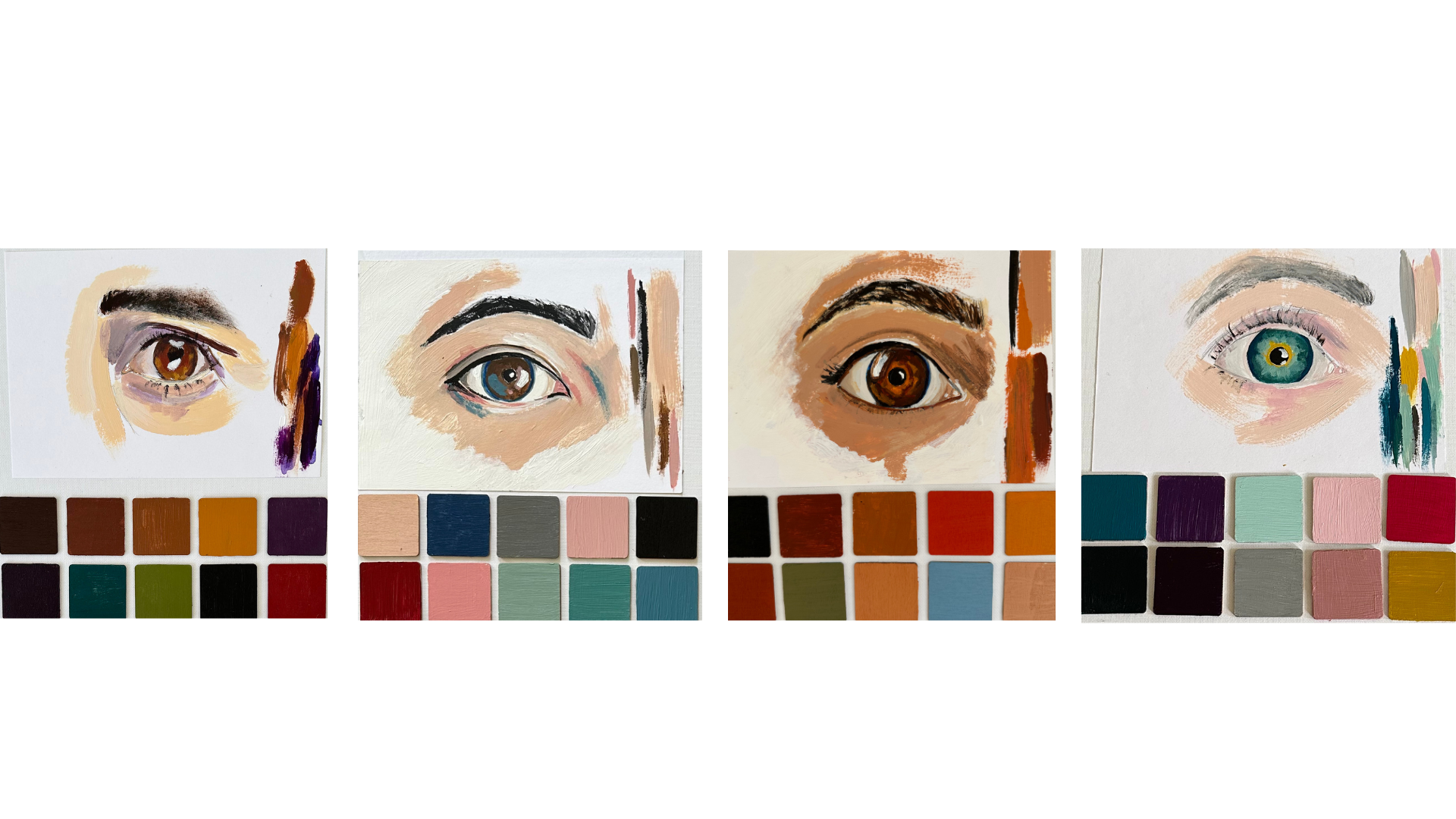
Color choice is a perceptual skill, not an external diagnosis.
Neuro-aesthetic research shows that each person has a unique beauty response. Color resonates through memory, emotion, culture, and personal story. This response cannot be selected for you.
While external facial characteristics—such as contrast, value, and chroma—provide useful information, they are only one part of the process. Color selection emerges from the integration of inner narrative and outer measurements.
Many people come to this work after having their colors chosen by an “expert” and feeling the result was wrong. Their instinct is usually correct.
Color harmony depends on artistic perception and self-awareness, not authority.
-
I teach a framework for choosing color that develops your perception rather than replacing it.
This is the same framework I use when training style professionals and when working with individuals. You learn how to see, assess, and choose colors that align with your identity—rather than receiving a fixed result.
Through coaching, you gain the confidence and skill to make color decisions yourself, grounded in both your inner story and visual principles.
This creates palettes that feel authentic, coherent, and sustainable over time.